| |
|
Welcome To
ISI - Inspection, Testing and
Certification |
|
ISI -
Industrial Safety Inspections is an leading, established,
nationwide, engineering inspection company performing statutory
safety inspections, thorough examinations and Health and Safety
inspections to comply with LOLER, PUWER, PSSR and COSHH Regulations,
Health and safety legislation and insurance requirements.
Since 1979 ISI has been performing statutory safety inspection and
has developed a fundamental understanding and a wealth of technical
experience in the field of machinery testing and thorough
examination for LOLER examination and PUWER inspection regulations.
With a team of nationwide surveyors, technical office staff and
dedicated administration staff, we can assist you with inspection,
testing and certification in these areas:
Image Showcase (mouse
over images to enlarge)
|
|
|
Regulations |
| |
|
LOLER 1998 regulations:
LOLER inspection including proof load testing and LOLER
certification of all types of lifting equipment from simple lifting
slings to complex tower cranes.
a few examples of LOLER inspection items are:
-
Lifting machines/Lifting tackle
inspections-
Cranes: Mobile, Overhead, Tower
inspections-
Jib inspections-
Hoist inspections-
Gantries inspections-
Chain blocks inspections-
Vehicle lifts inspections-
Hydraulic, Toe, Trolley jack
inspections-
Access platforms inspections-
Scissor lifts inspections-
Fork lift trucks/Telehandlers
inspections-
Tail lifts inspections-
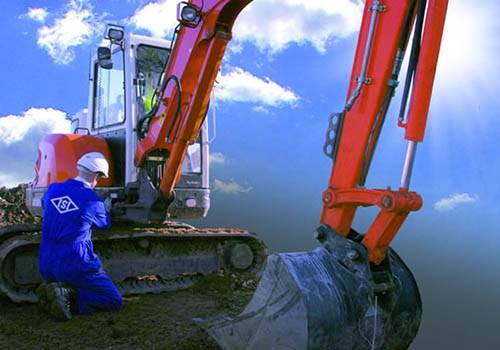
Excavators/Earthmoving Equipment
inspections
A full list of items requiring LOLER
Thorough examination / inspection is available at
www.isisafety.com or please
call our helpful LOLER inspection specialist team on 01675 484779.
PUWER 1998 regulations:
PUWER inspection including statutory testing and PUWER certification
of all types of work equipment and dangerous machinery.
-
Power press inspection and testing-
Hydraulic press inspection-
Press brake inspection-
Guillotine inspection-
Plastic injection moulding machine
inspection-
Miscellaneous work equipment
inspection and testing-
Dangerous machinery and guarding
inspections-
Playground equipment inspection and
testing
A full list of items requiring PUWER
inspection is available at
www.isisafety.com or please call our helpful PUWER inspection
specialist team on 01675 484779.
Pressure System Safety Regulations 2000:
PSSR inspection including thorough examination of pressure vessels.
Safety inspection of air receivers, insurance inspection, air
compressors, certification of pressure systems together with Written
Schemes of Examination. We can also perform hydrostatic pressure
testing, implosion testing and pressure vessel certification to
10,000 bar either on site or at our Nuneaton test house.
-
Pressure vessel inspection testing
and certification-
Air receiver inspection-
Air compressor inspection-
Autoclave inspection-
Steam boiler inspection-
Hot water boiler inspection-
Accumulator vessel inspection-
Steam cleaner inspection-
Steam vessel inspection-
Refrigeration vessel inspection-
Written schemes of examination
COSHH 2002 Regulations:
We can perform inspection and certification of LEV extraction plant,
such as dust, fume and paint extraction systems.
-
Extraction equipment inspection
testing and certification-
Dust/fume extraction inspection and
testing-
Spray booths inspection and testing-
Shot blasting units inspection and
testing-
C. O. S. H. H. assessments-
Air sampling
TESTING and
CERTIFICATION SERVICES
-
Proof load testing and
certification of lifting equipment on site or at ISI test house.-
Pressure testing sometimes referred
to as Hydraulic testing or Hydrostatic pressure testing,
Pneumatic testing of pressure vessels/assemblies/prototypes or
pipework, up to 10,300 bar/ 150, 000 psi-
Non-destructive testing ( NDT
testing ) of components dye penetrant testing and magnet
particle testing (MPI testing )-
Accident/ fire investigation-
Technical expert witnesses-
Noise assessments-
Risk assessments-
Electrical installation testing-
Portable electrical appliance (PAT)
testing-
Structural inspections of any
configuration of steelwork, including bridges, walkways,
gantries and metal buildings.-
Inspection of pedestrian walkways
and access platform to BSEN 14122-
Corrosion assessments and
ultrasonic thickness measurements-
Pre purchase surveys and pre export
surveys of plant-
National and International
Inspections
For more information please visit our
web site at www.isisafety.com
or call our helpful team for Professional advice on 01675 481779
Image Showcase (mouse
over images to enlarge)
|
|
|
FAQ's about LOLER and PUWER Inspection
Regulations |
| |
|
What does LOLER stand for ?
LOLER is an abbreviation of Lifting Operations and Lifting Equipment
Regulations 1998. It is often referred to as the LOLER regs or LOLER
98 regulations. The LOLER regulations came into force on 5 December
1998.
What is LOLER?
LOLER replaced existing legal requirements relating to the use of
lifting equipment, for example the Construction (Lifting Operations)
Regulations 1961, the Lifting Plant and Equipment (Records of Test
and Examination etc) Regulations 1992 and the Docks Regulations
1988. Many aspects of LOLER should therefore be familiar to you.
The LOLER Regulations aim to reduce risks to people’s health and
safety from lifting equipment provided for use at work. In addition
to the requirements of LOLER, lifting equipment is also subject to
the requirements of the Provision and Use of Work Equipment
Regulations 1998 (PUWER)
What items require inspecting under LOLER?
A LOLER thorough examination must be completed on all lifting
equipment to comply with LOLER. The LOLER definition of Lifting
equipment includes any equipment used at work for lifting or
lowering loads, including attachments used for anchoring, fixing or
supporting it. The LOLER Regulations cover a wide range of equipment
including, cranes, fork-lift trucks, lifts, hoists, mobile elevating
work platforms, and vehicle inspection platform hoists. The
definition also includes lifting accessories such as chains, slings,
eyebolts etc. LOLER does not apply to escalators, these are covered
by more specific legislation, i.e. the Workplace (Health, Safety and
Welfare) Regulations 1992. A full list of items requiring LOLER
Thorough examination / inspection is available at
www.isisafety.com or please
call our helpful LOLER inspection specialist team on 01675 484779.
What does LOLER do?
Generally, the LOLER Regulations require that lifting equipment
provided for use at work is:
-
Positioned and installed to
minimise any risks;-
Strong and stable enough for
the particular use and marked to indicate safe working loads;-
Used safely, i.e. the work
is planned, organised and performed by competent people; and
subject to ongoing thorough examination and, where
appropriate, inspection by competent people, such as ISI.
What does PUWER stand for ?
PUWER is an abbreviation for Provision and Use of Work Equipment
Regulations 1998. It is often referred to as the PUWER Regs or PUWER
98 regulations. The Provision and Use of Work Equipment Regulations
1998 (PUWER) came into force on 5 December 1998.
What is PUWER?
PUWER replaces the Provision and Use of Work Equipment Regulations
1992 and carries forward these existing requirements with a few
changes and additions, for example the inspection of work equipment
and specific new requirements for mobile work equipment. Many
aspects of PUWER should therefore be familiar to you.
The PUWER Regulations require risks to people’s health and safety,
from equipment that they use at work, to be prevented or controlled.
In addition to the requirements of PUWER, lifting equipment is also
subject to the requirements of the Lifting Operations and Lifting
Equipment Regulations 1998 (LOLER)

What items require inspecting under PUWER?
A thorough examination by a competent person must be performed on
all high risk work equipment under PUWER regs, Lower risk and simple
work equipment items can be inspected in-house by your own competent
staff, providing they have the necessary competency. Generally, any
equipment which is used by an employee at work is covered, for
example hammers, knives, ladders, drilling machines, power presses,
circular saws, photocopiers, lifting equipment (including lifts),
dumper trucks and motor vehicles. Similarly, if you allow employees
to provide their own equipment, it too will be covered by PUWER and
you will need to make sure it complies.
Work equipment must have met all the requirements of the Regulations
from 5 December 1998. However, requirements relating to certain
aspects of mobile work equipment (see below) did not apply to such
equipment (provided for use in the business before 5 December 1998)
until 5 December 2002. Read HSE information sheet MISC156 if you use
hired mobile work equipment.
Examples of uses of equipment which are covered by the Regulations
include starting or stopping the equipment, maintaining, servicing,
repairing, modifying, cleaning and transporting.
A full list of items requiring PUWER inspection is available at
www.isisafety.com or please
call our helpful PUWER inspection specialist team on 01675 484779.
What does PUWER do?
In general terms, the PUWER Regulations require that equipment
provided for use at work is: maintained safe for use, in a
safe condition and, in certain circumstances, suitable for
the intended use, inspected to ensure this remains the case
by a suitable competent person such as ISI, used only by people who
have received adequate information, instruction and training;
and accompanied by suitable safety measures, e.g. protective
devices, markings, warnings.
Do the PUWER Regulations apply to me?
If you are an employer or self-employed person and you provide
equipment for use at work, or if you have control of the use of
equipment, then the PUWER inspection regulations will apply to you.
They do not apply to equipment used by the public, for example
compressed-air equipment used in a garage forecourt. However, such
circumstances are covered by the Health and Safety at Work etc Act
1974 (HSW Act).
While your employees do not have duties under PUWER, they do have
general duties under the HSW Act and the Management of Health and
Safety at Work Regulations 1999 (MHSWR), for example to take
reasonable care of themselves and others who may be affected by
their actions, and to co-operate with others.
The PUWER Regulations cover places where the HSW Act applies – these
include factories, offshore installations, offices, shops,
hospitals, hotels, places of entertainment etc. PUWER also applies
in common parts of shared buildings and temporary places of work
such as construction sites. While the PUWER Regulations cover
equipment used by people working from home, they do not apply to
domestic work in a private household.
What do the PUWER Regulations require me to do?
You have duties to ensure that work equipment you provide meets the
requirements of PUWER. In doing so, you should ensure that it is:
-
Suitable
for use, and for the purpose and conditions in which it is used;-
Maintained
in a safe condition for use so that people’s health and safety
is not at risk; and-
Inspected in certain
circumstances to ensure that it is, and continues to be, safe
for use. Any inspection should be carried out by a competent
person (ISI can assist you in this role) and a record kept until
the next inspection.
You should also ensure that risks,
created by the use of the equipment, are eliminated where possible
or controlled by:
-
Taking appropriate ‘hardware’
measures, e.g. providing suitable guards, warning devices,
system control devices (such as emergency stop buttons)
protection devices, markings and personal protective equipment.-
Taking appropriate ‘software’
measures such as following safe systems of work (e.g.
performing maintenance only when the machine is correctly
isolated), and providing adequate information, training and
instruction.
A combination of
these measures may be necessary depending on the requirements of the
work, your assessment of the risks involved, and the practicability
of such measures.
You need to ensure that people using work equipment have received
adequate training, instruction and information for the particular
equipment.
With reference to Mobile work equipment, in addition
to these general requirements which apply to all work equipment,
Part III of PUWER contains specific duties regarding mobile work
equipment, for example fork-lift trucks and dumper trucks. You
should ensure that where mobile work equipment is used for carrying
people, it is suitable for this purpose. Measures should be taken to
reduce the risks (e.g. from it rolling over) to the safety of the
people being carried, the operator and anyone else.
Power presses inspections- Part IV of the PUWER
Regulations also contains specific requirements regarding power
presses. In particular, you should have a power press, and
associated guard or protection device, thoroughly examined at
specified intervals by a competent person such as ISI.
For more information please visit our web site at
www.isisafety.com or call our
helpful team for Professional advice on 01675 481779. |
|
KEY WORDS |
| |
|
Inspection, Testing,
Certification, thorough examination, examination, LOLER inspection,
PUWER inspection, LOLER testing, safety inspection, ISI, thorough
examination, Health and Safety Inspection, insurance inspections,
LOLER certification, Pressure vessel testing, Air compressor
testing, LOLER 98, PUWER 98, LOLER 1998, PUWER 1998, PUWER, LOLER,
Pressure testing, hydrostatic testing, Proof load testing, Statutory
Inspections, Engineering Inspection Insurance. Test House, Testing
house. lifting equipment testing, lifting equipment inspection,
Insurance inspection, tank inspection, air vessel inspection,
pressure vessel testing, pressure vessel inspection. |
|
Visit our
website for more info or contact a member of our team |
|